

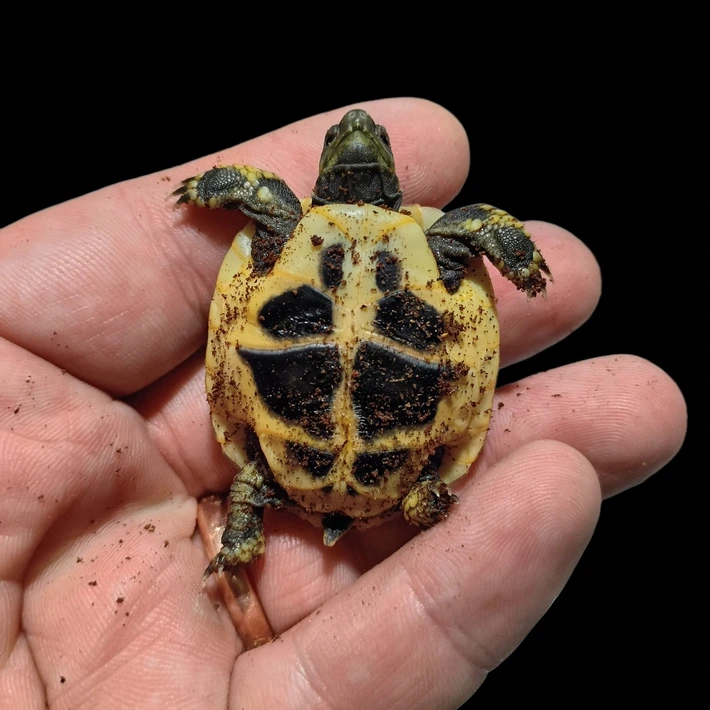
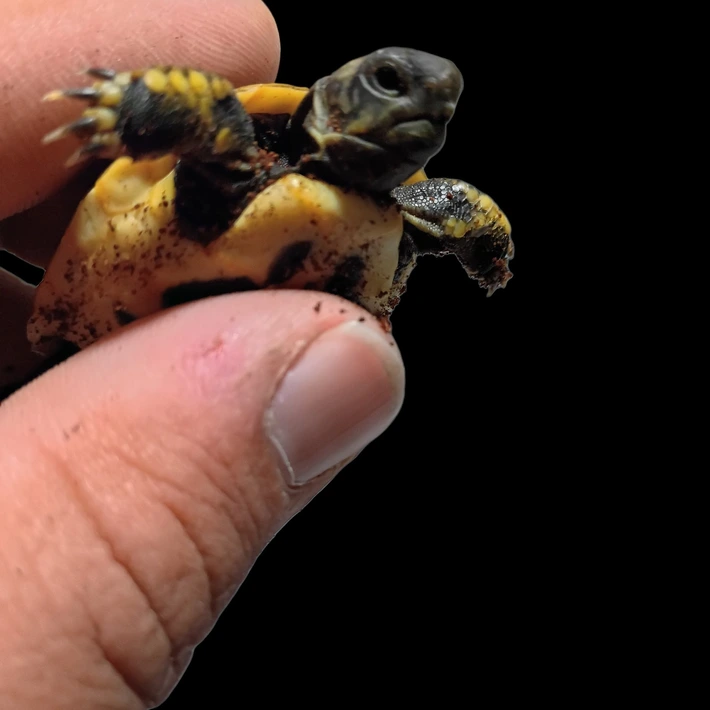
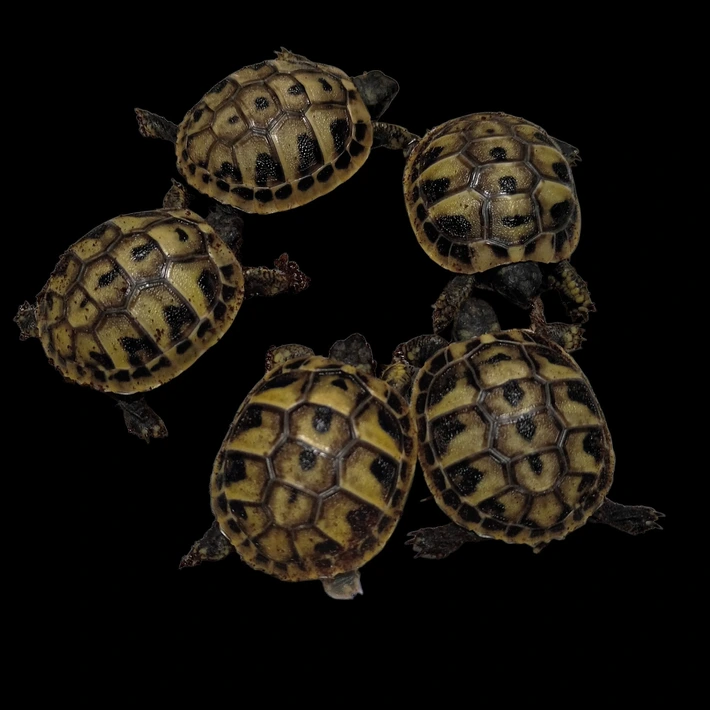
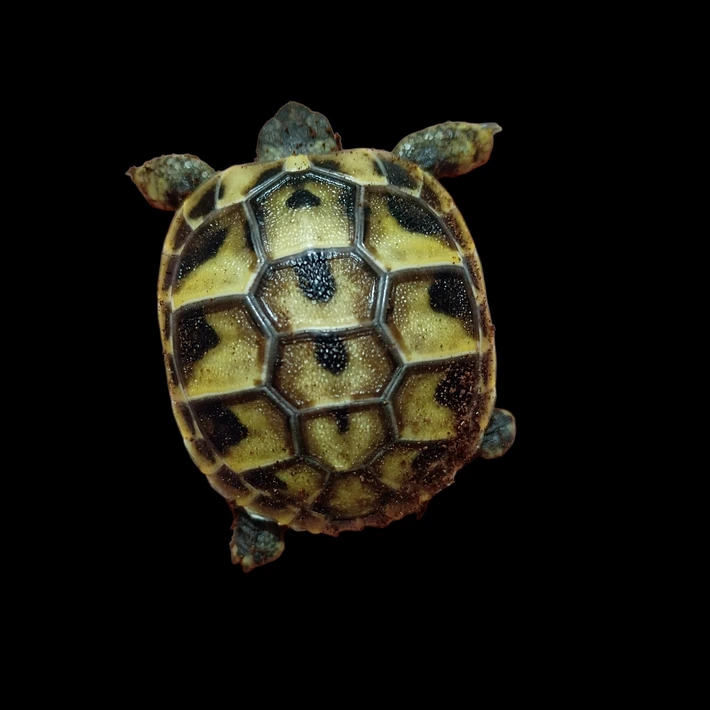
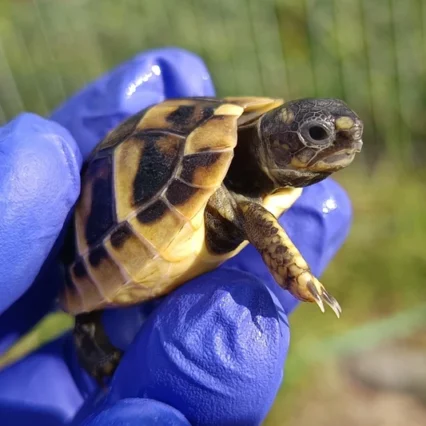
Baby Hermanns Tortoise (Eastern)
by
Additional information
$275.00
Common Name: Eastern Hermanns Tortoise
Scientific Name: Testudo hermanii boettgeri
Current Size: 1.5″ +/-
Average Adult Size: 6-9″ (females larger)
Area of Origin: Greece, Macedonia, Bulgaria, Serbia, Bosnia, and Albania
Description: Light brown color with brown to black bands around each scute of the shell. These pretty tortoises are very similar in look to some localities of Greek tortoises, but lack the spurs on the rear thighs that Greeks have, as well as different colorations on the belly.
Natural Habitat: Mediterranean tortoises, these animals live in rocky hillsides and scrubland where they come and go from their hides in order to maintain the ideal temperatures. They do brumate/hibernate naturally, and will brumate in captivity if those proper conditions are given. As adults, they can safely handle body temperatures as low as 35 degrees during hibernation, and on cold spring or fall days, they will retreat underground to maintain some warmth. Summer highs up to 110 degrees can be tolerated as long as there is a cooler, underground, or damp retreat the tortoise can get into. In hot climates, they will spend much of the summer days in hide areas or simply buried under an inch or two of earth aestivating to conserve energy and resources.
Natural Diet: This tortoise is naturally a browser, eating broadleaf weeds and low leaves from bushes and shrubs. Their natural diet is very high in fiber and low in proteins and sugars. Some individuals will eat grass while others prefer not to.
Adult Behavior: Adult tortoises are active, busy tortoises when the temperatures are in their ideal ranges (60-85 degrees). They can be somewhat aggressive towards each other particularly during breeding season (spring), but usually can be kept in small groups without any major problems, particularly animals that have been raised in groups. Most will eagerly come to their keepers looking for food once they are comfortable in their environments. They can be good climbers and will make attempts to escape, so perimeter fences should be buried at least 6-12″ underground, and sidewalls 12-16″ above ground will normally contain them. Constant attempts to escape can sometimes be corrected by enlarging the enclosure and adding visual barriers within it (logs, boulders, more plants, etc).
Our Current Care: During cooler weather or indoors, these tortoises are kept indoors on a damp coco coir substrate with a hidebox or two that they can get into to feel secure and have a more humid hiding area option which is critical for smooth shell growth. We house them in cheap, simple plastic tubs that can be purchased at WalMart or Target, generally 3 to 4 square feet in size for babies, and larger enclosures like stock tanks for juveniles or temporary housing for adults. Low sides work best as excess heat can escape and makes viewing and access much easier. We prefer not to use sand as a substrate as it sticks to the food offerings and gets inadvertently eaten and can accumulate in the gut (in the wild, sand/dirt is generally hard packed and the food is generally dry on the surface, and is up off the surface, so it doesn’t get eaten much in the wild). Temperatures in the room fluctuate between 70 at night up to 80 during the day in the summer months, with a heat light/heat source overhead bringing a small area (10%) of the enclosure up to about 95 degrees as an option that they can get in and out of as needed. At night everything is off, no heat and no light. Temperatures in the winter can safely dip into the 60s for this species with no negative effects as long as they are able to heat up again during the day. We have a UVB source overhead (generally a linear tube ZooMed Reptisun 10.0 bulb), and larger enclosures will use 80-100W mercury vapor bulbs instead.
The diet we offer almost all our tortoises consists of mixed leafy greens, and our primary list includes dandelion, endive/escarole, turnip greens, collared greens, dark leaf lettuces (green/red), mulberry leaves, grape leaves, plantain, cactus pads, and mallow. We will typically take 4-6 of these items at a time as available and chop it small to prevent the tortoises from being able to avoid any one or two items (sort of forces them to get a little of everything). We top this with a handful of our Herbal Hay. About twice a week we will add calcium or calcium/D3 supplement, twice a week add our Food Fixer supplement, and once a week will add a general reptile/herbivore multivitamin like Repashy Superveggie to the food (these are all powder form). Shake well to distribute, and this is what’s fed to all the indoor (generally baby and juvenile) tortoises. Commercial pellets can be dampened to soften them and mixed in as well, and effort should be made to include this occasionally so that they are used to eating it, which helps in a pinch to feed on a day or two where you don’t have fresh greens available. Vegetables can be added to the diet for variety, but fruit should generally be avoided as it can disturb their digestive process when they get the influx of sugar.
The tortoises are removed from their enclosure and soaked in a separate 1/4″ deep pan of warm water daily or almost daily for 30 minutes each time. We don’t generally use water dishes in the enclosures because of the risk of drowning (yes, we have lost babies to drowning when they flipped over in 1/4″ of water).
We don’t use the “closed chamber” method that has become popular in some groups and forums (keeping them very high humidity and very warm). This speeds up their growth rate but isn’t natural in any way, and has significant respiratory risks if temperatures drop (at all), and shell rot and mold are a lot more common. A wild tortoise of any species we keep would never see these conditions more than a few hours at a time in the wild during a summer rainstorm. We keep them with open tops, warmer and cooler areas to go between, with a ‘more’ humid hide available to use as they want to. They are free to choose the conditions, temperatures, and humidity levels they want within this setup.
Standard Shipping
At Tortopian Premium, we take every precaution to ensure that your tortoise or reptile supplies arrive safely and in excellent condition. Every live tortoise is carefully inspected, securely packaged, and prepared for transport before leaving our facility.
Standard shipping is available for most eligible orders within our delivery network. Shipping charges are calculated at checkout based on your location, the size and weight of your order, and whether your purchase contains live animals, habitats, or accessories. Delivery estimates are typically 2-7 business days after your order has been processed and dispatched. Processing times may vary depending on product availability, health inspections, seasonal demand, and weather conditions.
For live tortoise shipments, delivery schedules are determined with animal welfare as our highest priority. Orders may be delayed during periods of extreme heat, freezing temperatures, severe storms, or other conditions that could compromise the safety of the animal during transit. If your shipment needs to be rescheduled, our customer support team will contact you promptly to arrange a suitable delivery date.
Certain oversized products, including large enclosures, habitat furniture, or bulky accessories, may incur additional shipping fees. These charges, if applicable, will be clearly displayed during checkout before payment is completed.
Orders shipped directly from one of our trusted breeding or supplier partners may require additional processing and delivery time. Likewise, deliveries to remote or rural locations may take longer than our standard delivery estimates.
Customers are responsible for ensuring that the shipping address provided is accurate and that someone at least 18 years of age is available to receive deliveries containing live animals. Tortopian Premium cannot be held responsible for delays, additional shipping costs, or unsuccessful deliveries resulting from incorrect address information or failed delivery attempts.
Once your order has been shipped, you will receive a shipping confirmation email containing your tracking information, allowing you to monitor your shipment until it reaches its destination.
Please note that shipping charges are non-refundable once an order has been dispatched, except where required by law or in cases where an error has occurred on our part.
For more information regarding cancelled orders, damaged shipments, exchanges, or refunds, please visit our Return & Refund Policy or contact our customer support team for assistance.
Related products
-

Baby Hermanns Tortoise (Western)
$750.00 -

-

-
Baby Hermanns Tortoise (Eastern)
$275.00
Same day delivery
for order beore 11:00h!
Free pick up from
1000S 8th Avenue, NY!
Rating 4.8/5!
from verified users
Call us in 09:00-16:00h
Message us,